You picked Zigbee. Smart move. You’ve got the coordinator picked out (SONOFF Plus, SkyConnect, or whatever you settled on after the protocols guide). Now you’re staring at an Amazon search for “Zigbee bulb” and there are 47 brands you’ve never heard of, half of them in three-packs for $14. Some look fine. Some are clearly knock-offs. Reviews are split between glowing and “DOA, returned.” You closed the tab. Twice.
So. What are the best Zigbee devices for beginners in 2026, and which ones are worth your money?
The honest answer is shorter than the comparison threads on Reddit suggest. About four brands cover 90% of what a beginner needs, and a complete starter kit costs under $100. This guide covers what to buy, what to skip, and the trade-offs that aren’t on the box.
The 30-second version
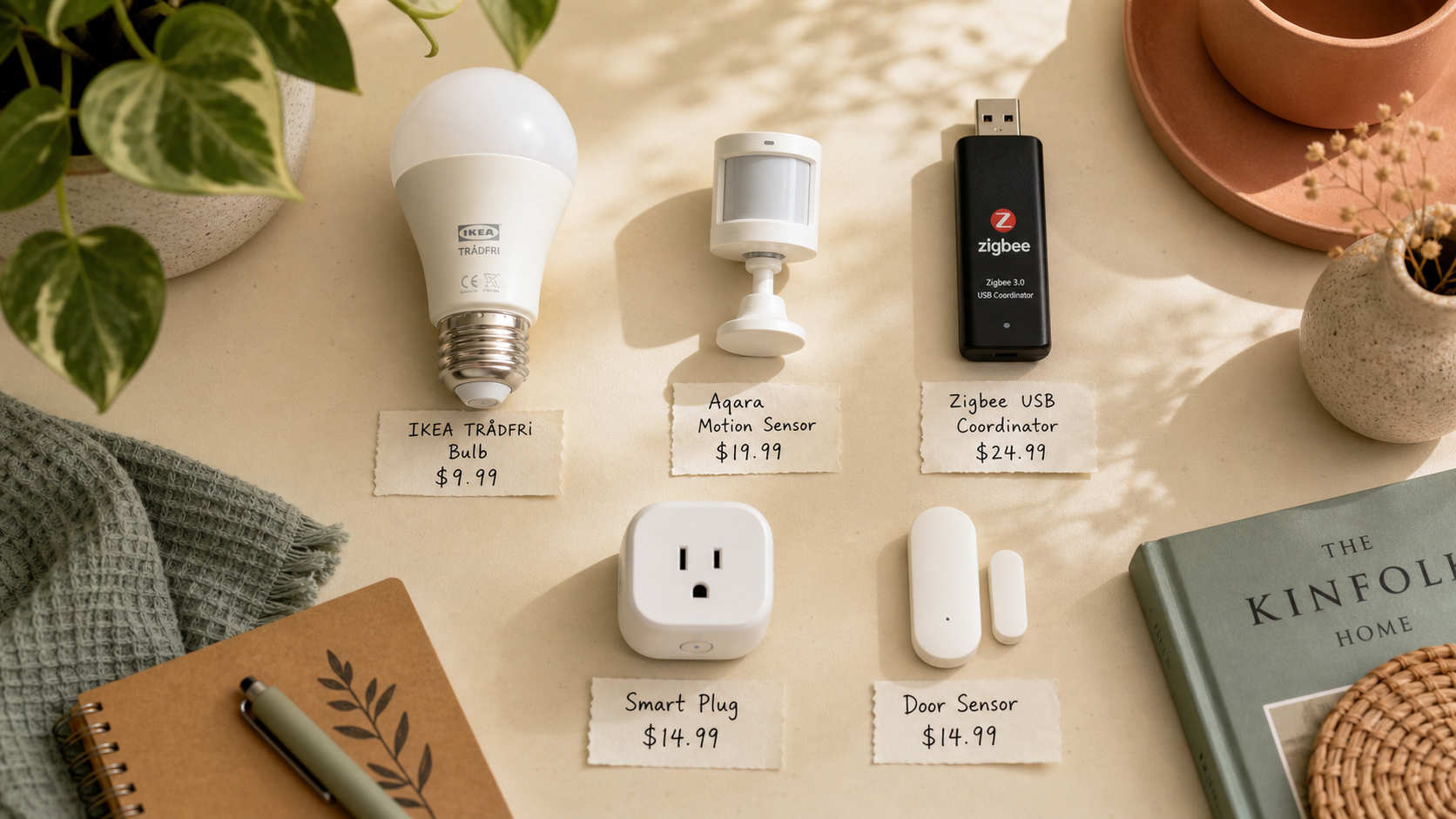
Buy IKEA TRÅDFRI bulbs (cheap, reliable), Aqara sensors (best build, best battery life), and SONOFF or Innr smart plugs. Skip generic Amazon brands you’ve never heard of. Skip Wi-Fi devices when a Zigbee equivalent exists. A solid starter kit (coordinator, three bulbs, motion sensor, door sensor) costs about $90 and gives you everything you need to build your first five automations.
The four brands worth knowing
In Zigbee, brand reputation matters. A $7 bulb from a no-name brand can pair fine, work for two months, then drop offline forever. These four brands have years of solid Home Assistant compatibility and active community support.
IKEA TRÅDFRI. The budget hero. Bulbs from $7-15, plugs around $10, motion sensors and remotes available. Build quality is decent and Zigbee performance is solid. Available at IKEA stores and online. You won’t get fancy features, but you’ll get reliable ones.
Aqara. The sensor king. Motion sensors, door sensors, vibration sensors, water leak sensors, temperature/humidity sensors. Best-in-class battery life (often 1-2 years) and small form factor. Slightly pricier than SONOFF but worth it for sensors you’ll mount and forget.
SONOFF. The cheap-and-cheerful brand. Sensors and plugs at the lowest reasonable prices. Build quality is fine, battery life is shorter than Aqara, but for the price you can’t really argue. Works flawlessly with Zigbee2MQTT or ZHA.
Innr. The Hue alternative. Bulbs that work with the Hue bridge but cost less than Hue. Good middle ground if you want premium build without premium prices.
The “skip list”: no-name Amazon brands (Sayne, Lockon, brands with seven random characters), Tuya-only Wi-Fi devices flashed to Zigbee, Sengled (works but doesn’t repeat the mesh, hurts your network), Wyze Zigbee accessories (vendor-locked, won’t pair with HA out of the box).
The starter kit ($85-100)
If you bought everything below, you’d have a working Home Assistant smart home in a single Amazon order:
- Coordinator: SONOFF Zigbee 3.0 USB Dongle Plus ($30) or Home Assistant Connect ZBT-1 ($40)
- Three IKEA TRÅDFRI E26 bulbs ($21-30 for a 3-pack) for living room, bedroom, kitchen
- One Aqara Motion Sensor P1 ($18)
- One Aqara Door/Window Sensor ($13)
- One SONOFF SNZB-02 Temperature/Humidity Sensor ($12) for the bathroom or basement
Total: $94-113 depending on coordinator and bulb prices that day.
That’s enough hardware to build the first 5 automations we cover elsewhere, plus several from the automation idea library. After this kit, you’ll start adding sensors as specific automations call for them, not because they’re cheap.
Bulbs
Smart bulbs are usually the first thing people buy. Here’s what’s worth picking up.
IKEA TRÅDFRI E26 White Spectrum (~$10). The default. Color-temperature adjustable from warm to cool, dimmable, pairs reliably. Available in standard, candelabra, and globe sizes. Best price-per-bulb in the entire Zigbee market.
IKEA TRÅDFRI Color (~$15). Same bulb, with full RGB. Use for accent lights, kid’s rooms, or “movie mode” scenes.
Philips Hue White Ambiance (~$20). Premium build, longer warranty, slightly faster response. Use the local Hue Bridge integration in Home Assistant for instant local control. Worth it for primary living spaces if budget allows.
Innr E26 (~$13). Hue-compatible at lower price. Works with the Hue Bridge or directly via Zigbee. Great for filling out a Hue setup without paying full Hue prices.
What to skip: Sengled bulbs (technically work, but they don’t act as Zigbee mesh repeaters, which weakens your whole network as you add more). No-name “Smart Life” or “Tuya” bulbs from Amazon that claim Zigbee but are actually Wi-Fi.
Sensors
Where Aqara earns its reputation.
Aqara Motion Sensor P1 (~$18). The default for most beginners. Detects motion in seconds, has a two-year battery life, mounts with double-sided tape or a magnetic base. Works at room corners or above doorways.
Aqara Door/Window Sensor (MCCGQ11LM) (~$13). Two-piece magnet sensor. Sticks on a door and frame with adhesive. Battery lasts ~2 years. Great for the laundry, garage, fridge, mailbox, or any door you want HA to know about.
SONOFF SNZB-02 Temperature/Humidity (~$12). Cheap, accurate, runs on a single CR2477 battery for ~6 months. Use one in the bathroom (humidity-triggered fan), kitchen (warn about open fridge), basement (mold prevention), and crawlspace (freezing pipe alert).
Aqara Vibration Sensor (DJT11LM) (~$18). The laundry sensor. Stick it on the side of your washer or dryer. The classic “laundry done” automation.
Aqara Water Leak Sensor (~$15). Place under the dishwasher, water heater, or kitchen sink. Pairs with the leak-detection automation in our automation library. Worth $15 against a flooded kitchen.
What to skip on sensors: anything claiming “Zigbee” without a recognizable brand. Battery-powered sensors below $8 are almost always worse than the $12-18 brand options.
Smart plugs
Where you control old dumb appliances.
SONOFF S31 Lite Zigbee (~$12). The cheapest reliable Zigbee plug for US users. Energy monitoring is not included on the Lite version, but on/off works perfectly. Use for lamps, fans, slow cookers, coffee makers, and anything you want HA to power-cycle.
IKEA TRÅDFRI Plug (~$10-15). Solid, simple, no energy monitoring. Same use cases as the SONOFF.
Innr SP120 (~$15-20). Has energy monitoring (you can see how many watts something is drawing). Useful if you want to detect “the dryer just stopped using power, so it must be done” without adding a vibration sensor.
What to skip: Amazon Wi-Fi plugs (cloud-dependent, congest your Wi-Fi). TP-Link Kasa (Wi-Fi only, requires their cloud).
Switches and buttons
The thing that makes a smart home feel less smart and more natural.
Aqara Wireless Mini Switch (WXKG11LM) (~$18). A single-press, double-press, long-press button. Battery-powered, sticks anywhere. Use as a bedroom “Good Night” trigger or as a light switch for someone who doesn’t want their phone out.
IKEA TRÅDFRI Remote (~$8). A simple dimmer remote. Cheap. Pairs with TRÅDFRI bulbs directly or with HA via your coordinator.
For in-wall switches (replacing dumb wall switches with smart ones), Zigbee is fine but Z-Wave is generally better. We covered that in the protocols guide. If you really want Zigbee in-wall, the Aqara H1 line works in Home Assistant.
What about locks and cameras?
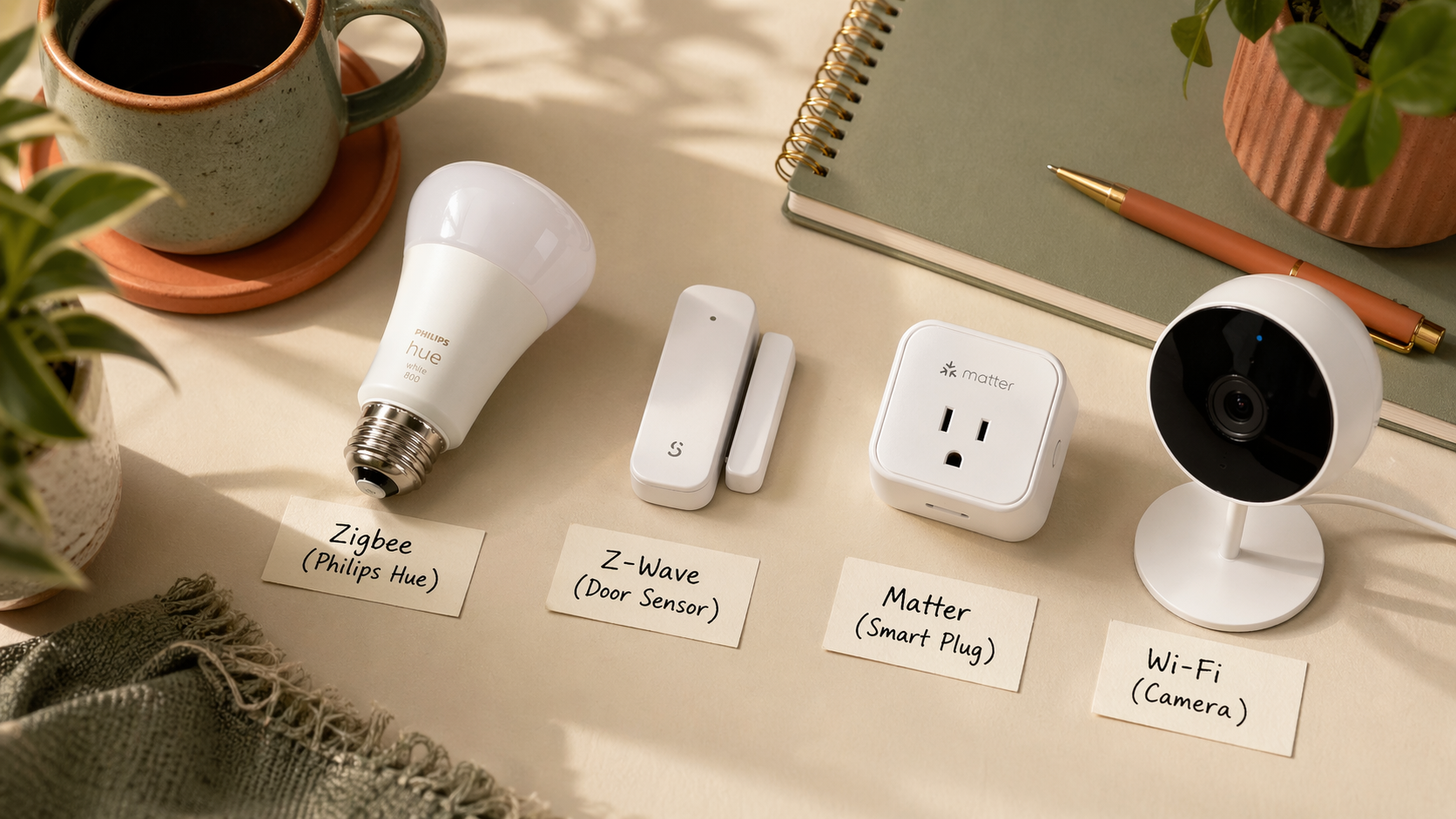
Zigbee locks exist but are rare. Z-Wave locks dominate that category and are generally better. Skip Zigbee for locks.
Cameras don’t run on Zigbee at all. Cameras need Wi-Fi or PoE bandwidth, which Zigbee can’t provide. Pick Wi-Fi or PoE cameras separately. We covered the Ring replacement path in another guide.
The honest downsides
A few things worth knowing.
Zigbee networks need repeaters. Battery-powered devices (sensors, buttons) don’t repeat the mesh; mains-powered devices (bulbs, plugs) do. If your sensors keep dropping offline, you probably need more mains-powered devices in between them and the coordinator. Adding a TRÅDFRI plug halfway across your house often solves it.
Different brands occasionally fight. Most pairings are fine, but every now and then a brand-X bulb will misbehave with a brand-Y sensor. The Zigbee2MQTT and ZHA forums have specific compatibility notes. If something acts weird, your search query is “[device name] zigbee2mqtt” or “[device name] zha.”
Battery-powered Zigbee devices need fresh batteries. Most last 1-2 years, but a sensor that’s been mounted for 18 months and starts misbehaving probably needs a CR2032 swap. Buy a 10-pack of CR2032 batteries and forget about it.
Who this is right for
If you’ve got Home Assistant running, your coordinator picked out, and you’re ready to actually buy hardware, this is your shortlist. Pick a starter kit, place an order, build the first automation by next weekend.
Who should wait
If you haven’t installed Home Assistant yet or you haven’t picked a Zigbee coordinator, do those first. Buying devices before the brain is set up is a recipe for boxes piling up unopened.
The hardware budget can also creep. Set a starter cap ($100 for the kit above) and stick to it for the first month. After you’ve actually used what you bought, you’ll know which sensors you want more of.
What to read next
- Your first 5 Home Assistant automations — build something useful with the kit you just bought.
- Zigbee vs. Z-Wave vs. Matter vs. Wi-Fi — the protocol primer behind every recommendation here.
- Automation idea library — 80+ real-world automations, filterable by device type, so you can plan your sensor purchases against actual use cases.